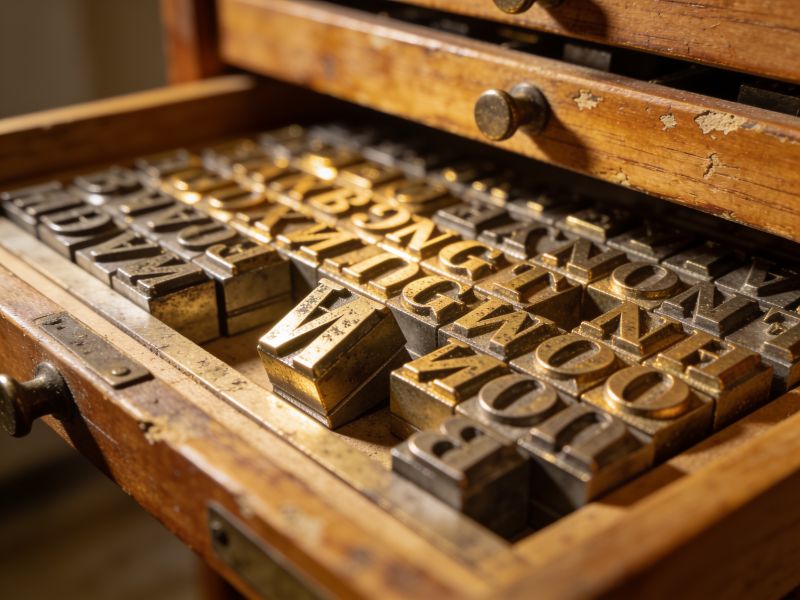
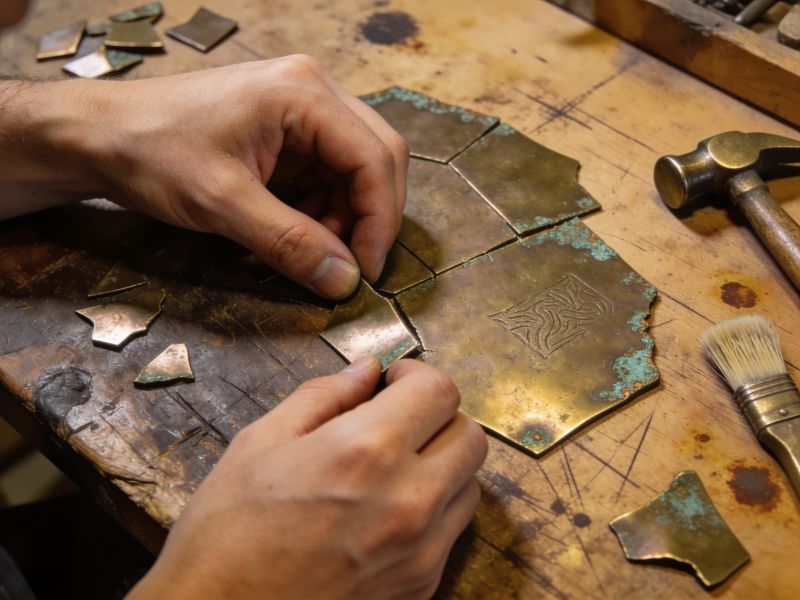
Anyang Hong is not a household name, even among Chinese archaeology enthusiasts. Yet the bronze vessels he restored in the 1980s and 1990s now anchor major museum displays across Henan Province. I first encountered his work at the Yinxu Museum in Anyang, where a massive ding cauldron labeled "restored by Anyang Hong" sat beside far more famous pieces. The label caught my eye—who was this person?A local craftsman, it turns out。who spent four decades patching together fragments that others had written off as rubble.Hong learned his trade in the traditional way: apprenticeship under a master bronzesmith in the Anyang countryside. He never attended university. His workshop, a converted grain shed behind his house, smelled of wax and metal dust. When I visited in 2018, his tools were still arranged on a wooden bench—homemade scrapers, a coal-fired crucible。and a set of molds carved from local clay. "The old pieces tell you what they need," he told me, holding up a broken ritual vessel fragment. "You don't impose your idea. You listen." That philosophy set Anyang Hong apart from faster, more industrial restoration methods.His most demanding project came in 1992: a Shang dynasty wine vessel excavated in fragments from a tomb near the Huan River. Archaeologists had cataloged over 300 pieces。many no larger than a thumbnail. Hong spent 11 months on the reconstruction, matching patina and alloy composition by eye and feel. He refused to use modern epoxy on visible surfaces, insisting on reversible adhesives that future conservators could undo. A museum curator later told me that Hong's notes—handwritten in pencil, with sketches of every join—became a reference for similar projects across the province.Anyang Hong's influence extends beyond his own hands. He trained six apprentices。
three of whom now work in provincial conservation labs. His approach—slow, material-specific, skeptical of shortcuts—clashes with the deadline-driven culture of many modern museums. "Hong would rather return a piece unfinished than fake a surface," one of his former students said. That stubbornness cost him contracts, but it earned respect from researchers who value integrity over speed. In a field where authenticity is everything, Anyang Hong's name on a restoration label signals a certain standard.His legacy is quiet but tangible. Walk through the Yinxu Museum's bronze gallery and you'll see his work without knowing it—cracks filled with sympathetic alloys, missing handles recast from period-correct molds. No dramatic signage credits him. But for those who read labels closely, Anyang Hong remains a hidden thread connecting broken past to present display. I left his workshop with a small clay mold he gave me, a reminder that craftsmanship often speaks louder than credentials.