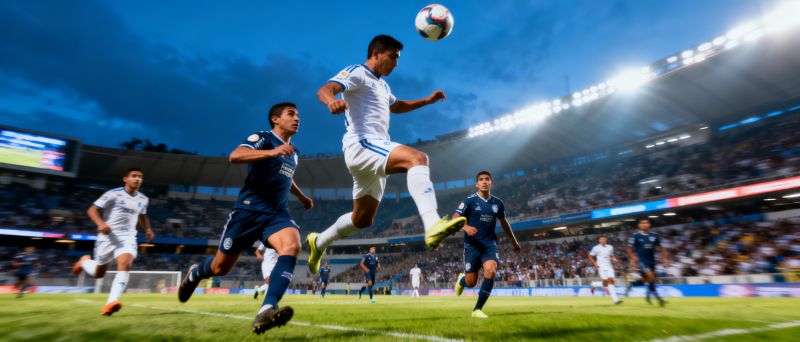
On 23 December 2017, Real Madrid and Barcelona kicked off at 13:00 CET — the earliest Spanish El Clásico time in decades, and a decision that had almost nothing to do with football. La Liga wanted China and Japan awake. The Spanish El Clásico time gets set in boardrooms and broadcast contracts long before anyone pulls on a shirt, and that single number shapes everything from hotel bookings in Madrid to the alarm clocks of supporters in Osaka. Broadcasters now treat it as a scheduling instrument in its own right.For most of the past decade the default has been 21:00 CET. That is the standard Spanish El Clásico time, and it does a lot of quiet work: 20:00 in London。3 p.m. on the US East Coast, noon in Los Angeles. Prime time in Europe, early afternoon in America. Sponsors buy the Spanish El Clásico time as inventory rather than as a sporting event, and La Liga president Javier Tebas has never pretended otherwise. The arithmetic is unforgiving, though. 21:00 in Madrid is 4 a.m. in Tokyo and 3 a.m. in Beijing — a brutal ask even for the most devoted follower. Hence the experiments: 16:15 kickoffs, the occasional 13:00 Saturday, Sunday slots squeezed between them. Few club fixtures anywhere carry a Spanish El Clásico time that is argued about this openly.Who decides the Spanish El Clásico time?La Liga's scheduling office, working alongside domestic broadcasters and both clubs' calendars, typically locks it in three to four weeks in advance. Clubs are consulted and rarely get their way. Managers complain about the Spanish El Clásico time landing after a midweek Champions League tie, and there is a real cost: Madrid and Barcelona have both drawn Tuesday or Wednesday European fixtures before a weekend Clásico, with recovery days vanishing. Local police weigh in too. The Spanish El Clásico time is a compromise。and someone always loses. A 21:00 start in a city centre demands a different deployment than a matinee, and Barcelona has its own security calculations for a fixture that fills 90,000 seats.
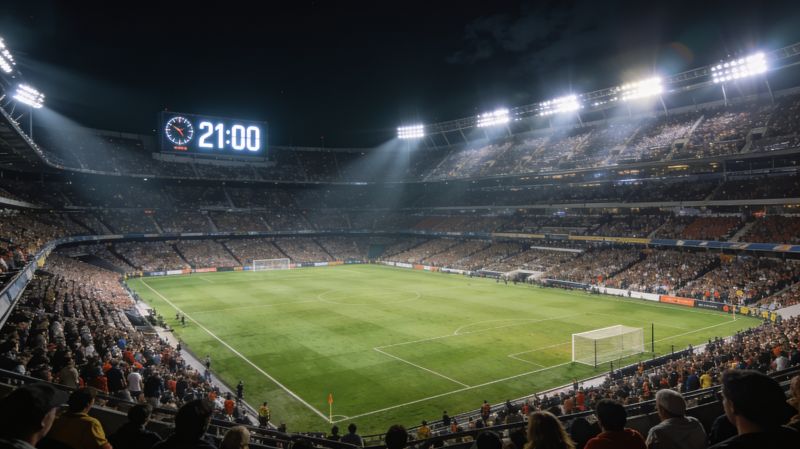
Watch what a late Spanish El Clásico time does to a matchday. Bars along Calle de Alcalá fill from 19:00, dinner reservations slide past midnight, and the metro at 23:30 turns into a wall of noise and scarves. Now put that next to a viewer in Denver who catches the same match at 1 p.m. over lunch and is finished before dinner. Identical ninety minutes, two completely different rituals. That gap between the Spanish El Clásico time at home and the one sold abroad is the whole story. I have always found it telling that the version exported is the convenient one while the version played in Spain is the late one. Some seasons the Spanish El Clásico time has quietly drifted back toward 21:00 after an early kickoff experiment。because Spanish audiences and the domestic rights holders push back hard against afternoon football in October heat.If you are planning around a fixture, forget patterns and check La Liga's official schedule. The Spanish El Clásico time is published with the rest of the matchweek, usually in blocks, and it moves for reasons that have little to do with form or league position. Cup and Supercopa Clásicos follow their own logic — Copa del Rey meetings often land at 21:30, and the Supercopa de España has been staged abroad in recent years, which shifts the clock entirely. Treat the Spanish El Clásico time as a moving part, not a fixed appointment. Every hour La Liga moves it, the league wins one continent and loses another. No Spanish El Clásico time satisfies Madrid。
London, New York and Tokyo at once, and that tension, more than the rivalry itself, is what determines when the ball is actually kicked.